Root Canal Treatment at Bishnoi Dental Care
Relief from tooth pain while saving your natural tooth from severe dental problems
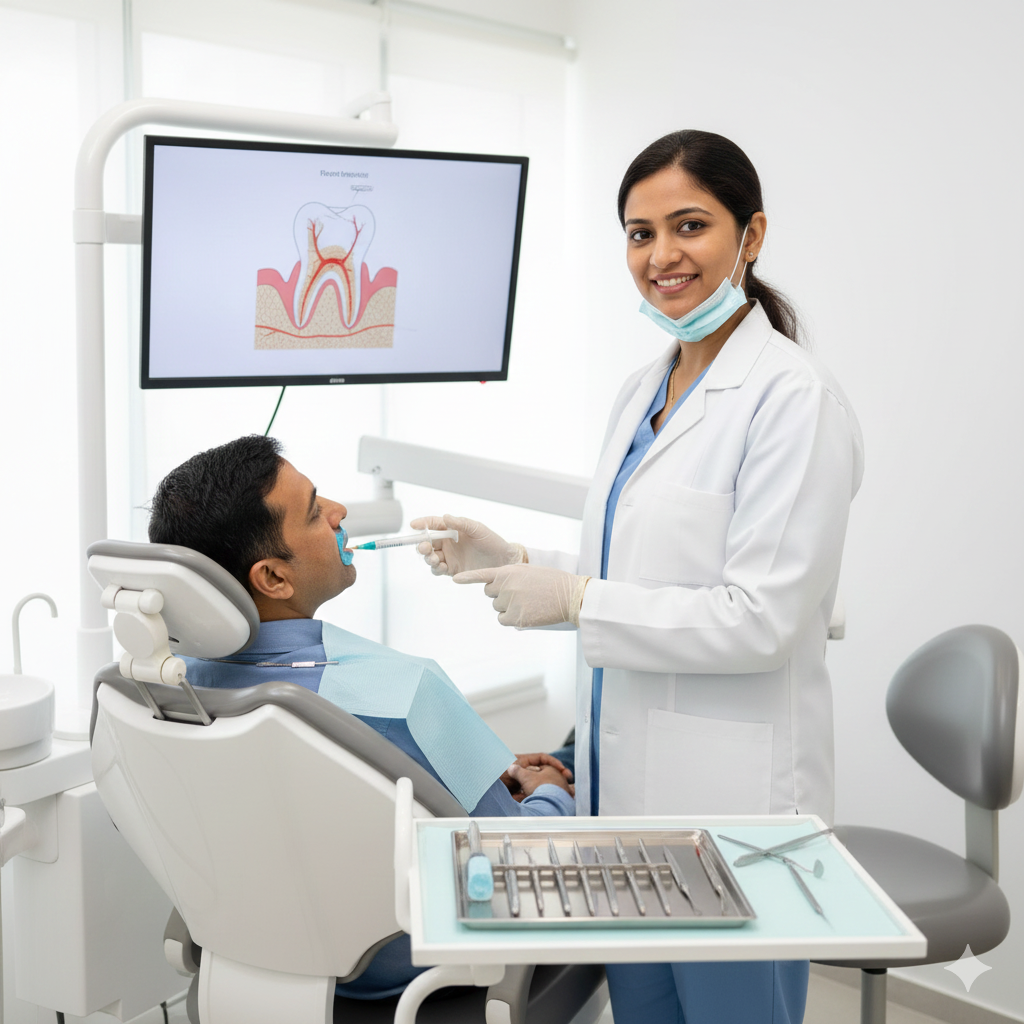
A root canal is done when the inside of a tooth (the nerve and pulp) gets infected or badly inflamed. This often happens due to deep cavities, old fillings, cracks, or injury. The goal of root canal treatment at our dental clinic is simple: remove the infection, stop the pain, and save the tooth instead of extracting it. At bishnoi dental, our expert Dentists are known by many patients as the best for root canals in Nimbahera. As one of the top regional Dental Clinics, we focus on gentle treatment, clear explanations, and careful work so you feel comfortable from start to finish, ensuring you have found a truly Good Dental Clinic Near you.

Branches

Experience

Doctors

Happy Patients
Why and When Root Canal Treatment Is Needed?
-
✔Persistent tooth pain that doesn’t settle, indicating severe dental problems
-
✔Sensitivity to hot or cold that lasts a long time, treatable at our dental clinic
-
✔Pain while chewing or biting pressure relieved safely by our expert Dentists
-
✔Swelling, pimple-like bump, or tenderness in the gums treated at a Good Dental Clinic Near you
-
✔Deep cavity, cracked tooth, or old filling causing nerve irritation managed by top-rated Dental Clinics
-
✔Tooth discolouration due to internal damage, easily addressed at bishnoi dental
Our Root Canal Treatment Process
We follow a clear, step-by-step approach:
-
✔
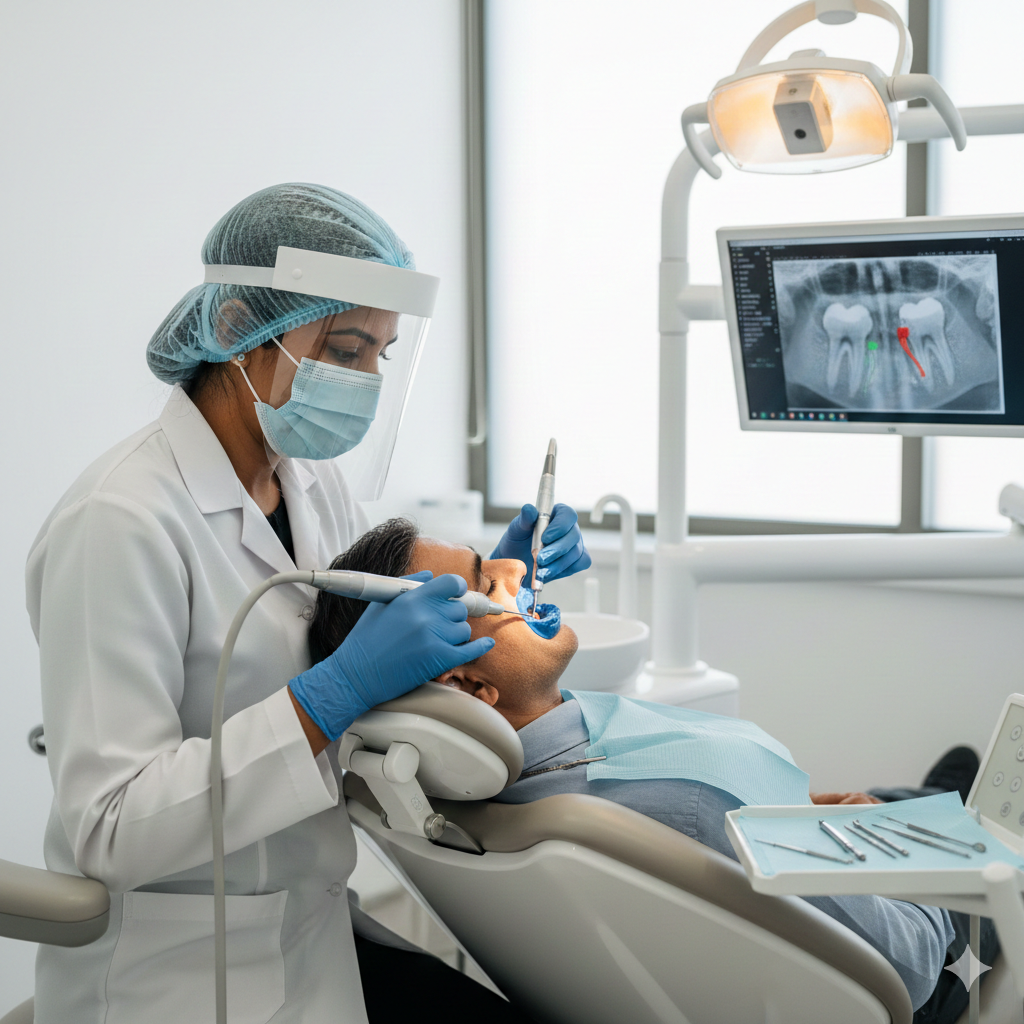
Assessment and Diagnosis We examine your tooth, check the gums, and take an X-ray to confirm infection and plan treatment.
-
✔
Numbing and Comfort Local anaesthesia is given so you stay comfortable and pain-free during the procedure.
-
✔
Cleaning the Infection The infected tissue is removed, and the canals are cleaned carefully to eliminate bacteria.
-
✔
Shaping and Sealing The canals are shaped and sealed to prevent reinfection and protect the tooth from the inside.
-
✔
Filling and Strengthening A filling is placed, and in many cases, a crown is advised to strengthen the tooth.
If needed, we may recommend additional steps like a crown or retreatment, and everything is explained clearly beforehand.
Benefits of Root Canal Treatment
-
✔
Pain Relief Root canal treatment removes infection and helps relieve ongoing tooth pain.
-
✔
Tooth Saving It allows you to keep your natural tooth instead of extraction.
-
✔
Better Chewing Comfort Once treated and restored, you can bite and chew normally again.
-
✔
Stops Infection Spread Treating the infected tooth helps prevent the problem from spreading further.
-
✔
Protects Your Smile Saving the tooth helps maintain your bite, spacing, and natural appearance.