
Dental Crowns at Bishnoi Dental Care
Cover, protect, and restore a tooth that needs support
A dental crown is a tooth-shaped cap placed over a weak, broken, or heavily filled tooth to protect it and help it function normally again. Crowns are often recommended when a tooth cannot be safely restored with a simple filling. At Bishnoi Dental Care, we provide Dental Crown Treatment in Nimbahera with careful planning so the crown looks natural, feels comfortable, and fits your bite properly.

Branches

Experience

Implants

Happy Patients
Why and When Dental Crowns Are Needed?
• A tooth is cracked, broken, or worn down
• A large filling has weakened the tooth
• After root canal treatment to prevent future fractures
• A tooth is badly discoloured or misshapen
• A dental bridge needs support from adjacent teeth
• A tooth has heavy sensitivity due to enamel loss
Crowns are meant to protect the tooth and help you chew comfortably.
Types of Dental Crowns We Offer
• Tooth-colored crowns for a natural appearance
• Strong crowns for back teeth that handle chewing pressure
• Crowns selected based on bite, tooth position, and durability needs
We recommend the best option after examining your tooth and discussing your preferences.
Our Dental Crown Treatment Process
We follow a clear, step-by-step approach:
- Examination and Planning
We check the tooth, take X-rays if needed, and decide if a crown is required. - Tooth Preparation
The tooth is shaped gently so the crown fits securely and comfortably. - Impression and Shade Matching
Impressions are taken, and the shade is matched to your natural teeth. - Temporary Crown
A temporary crown is placed to protect the tooth while the final crown is made. - Final Crown Fixing
The final crown is fitted, the bite is checked, and the crown is cemented securely.
At Bishnoi Dental Care, our Dental Crown Fixing Services in Nimbahera focus on comfort, accuracy, and a natural finish.

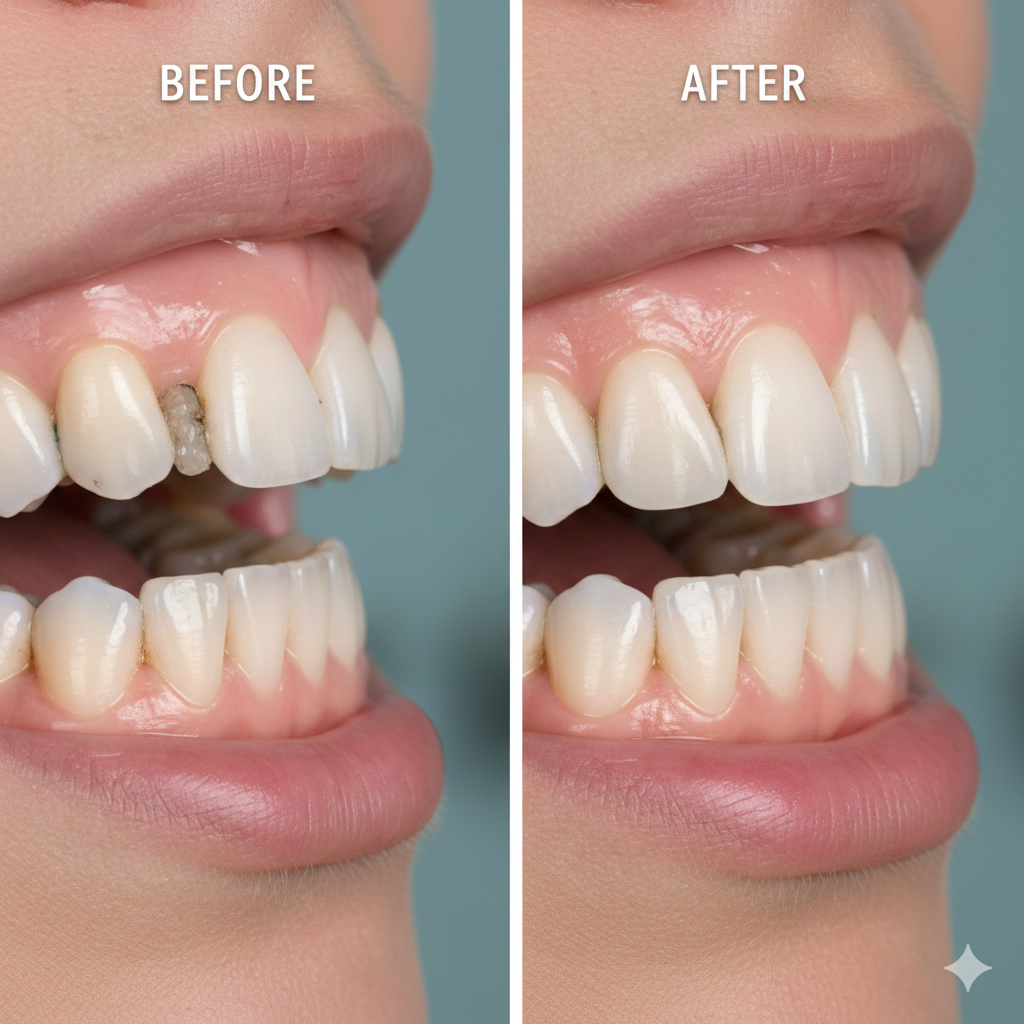
Benefits of Dental Crowns
Protection and Strength
Crowns cover and support weak or damaged teeth, protecting them from cracking further. They handle chewing pressure better than large fillings and help reduce the chance of sudden breakage.
Natural Look
Tooth-colored crowns are designed to match your natural teeth in shade and shape. When fitted properly, they blend smoothly with your smile and look like a real tooth.
Better Chewing Comfort
A crown restores the tooth’s shape and bite, so chewing feels normal again. It reduces sensitivity and discomfort while eating, especially when the original tooth was cracked or worn.
Long-Lasting Support
With daily brushing, flossing, and regular dental check-ups, crowns can last for years. Avoiding very hard foods and treating teeth grinding also helps improve durability.
Tooth Saving Option
Crowns help save teeth that are badly damaged but still repairable. By strengthening the tooth, they can prevent extraction and maintain your natural bite and spacing.
After-Care for Dental Crowns
- Avoid hard foods on the crowned tooth for the first day.
- Brush and floss daily, cleaning gently around the crown edges.
- Do not bite ice, pens, or very hard items to prevent damage.
- If you grind your teeth, use a nightguard if advised.
- Visit for regular check-ups to ensure the crown and gums stay healthy.
Contact the clinic if you feel pain, looseness, or bite discomfort.